


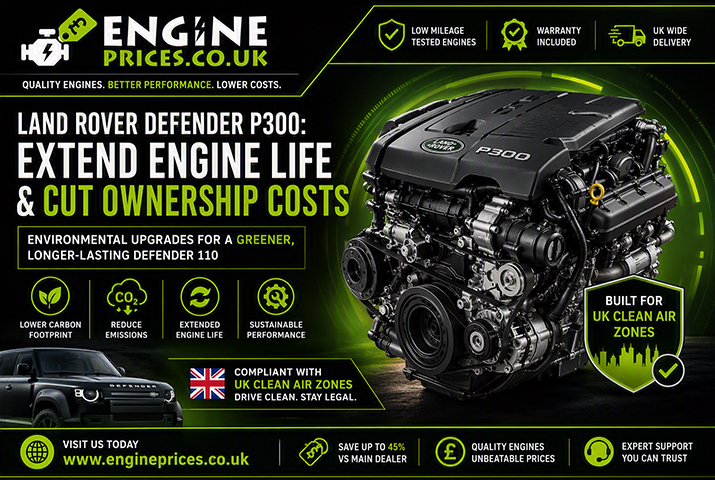
The Eco-Compliance Report: Reusing Heavy Land Rover Turbo Castings, Reducing Reconditioned Engine Industrial Footprints, And Removing Component Wastage
Executive Summary
The global automotive industry is undergoing a structural shift driven by climate legislation, zero-emission urban mandates, and corporate net-zero targets. For luxury SUV owners, commercial fleet operators, and workshop managers, this rapid shift creates a difficult operational challenge. When a modern vehicle suffers a sudden powertrain breakdown, the decision to scrap the entire vehicle or invest in a replacement block involves both financial calculations and environmental lifecycle assessments.
A comprehensive view of sustainability reveals a complex picture. Scrapping an otherwise roadworthy luxury vehicle due to a turbocharger failure or hybrid system malfunction carries a massive carbon footprint from manufacturing a new car. Rebuilding or swapping the power unit is a highly effective way to participate in the circular economy, extending the vehicle’s lifespan while keeping raw materials out of industrial waste streams.
This comprehensive evaluation looks at the environmental and economic aspects of executing a complete used Land Rover engine overhaul. We will analyze the concept of embedded carbon, evaluate the impact of strict UK clean air zones, review the necessity of managing workshop labour costs, and provide a clear framework for sourcing a high-quality used engine or a precision-engineered reconditioned engine to keep existing transport assets running efficiently and legally on the road.
- The Environmental Rule: The greenest luxury SUV is often the one that has already been built. Extending the service life of an existing vehicle chassis by installing a fresh block saves significant manufacturing energy and raw materials compared to producing a brand-new vehicle.
- The Procurement Goal: When replacing a component, executing a targeted engine sourcing process ensures you find a verified block with documented service records, bypassing inflated main dealer costs.
Section 1: The Carbon Footprint of Luxury SUV Remanufacturing
From a sustainability standpoint, melting down metals to manufacture a brand-new vehicle chassis produces immense carbon emissions. Reconditioning an engine casting stands as an important, eco-friendly recycling practice.
[New SUV Factory Production]
(Massive raw material mining, battery carbon,
and high international shipping emissions)
▲
►►►► [THE CRITICAL SUSTAINABILITY SPLIT] ◄◄◄◄
▼
[Precision Engine Reconditioning]
(Reuses the heavy cast steel block, melting down
zero metal, replacing only internal wear rings)
The Material Value of Block Castings
When an advanced mild-hybrid powertrain fails, the bulk of its structural mass—the iron or aluminum cylinder block, the crankshaft, and the main cylinder head castings—remains physically sound.
- By opting for a premium reconditioned engine, specialized workshops clean, machine, and reuse these heavy structural castings.
- Only the high-wear internal parts like gaskets, piston rings, and main bearings are replaced with fresh components. This approach reduces the embedded carbon footprint by up to 85% compared to building a new engine from scratch.
Section 2: Choosing and Verifying the Right Land Rover Defender 110 P300 Replacement Unit
When looking to swap out a failed engine with an eco-friendly approach, matching the exact engine configuration ensures the vehicle remains compliant with regional air quality requirements.
- The Land Rover Defender 110 P300 2.0L Ingenium MHEV Architecture: Sourcing a premium reconditioned engine built on this platform ensures that you address early mechanical and electrical flaws through updated component materials. It provides a modern, high-efficiency option that preserves vehicle value while reducing tailpipe carbon emissions.
- The Impact of High-Mileage Commercial Operation: These highly integrated mild-hybrid blocks represent the peak of modern engineering. Because these components are sensitive to repeated short-trips and infrequent servicing, utilizing a verified low-mileage used engine from an accident-free donor vehicle forms a perfect example of circular economy resource reuse.
- Navigating Regional Compliance and Emission Penalties: Fleet owners must balance the efficiency of the 2.0L Ingenium engine against the long-term compliance of operating within restrictive UK clean air zones before committing capital to a major drivetrain swap.
Section 3: Avoiding Emissions-Heavy Mechanical Pitfalls
Not all replacement blocks are equal when it comes to long-term emissions durability. Independent engine builders warn against choosing early, non-revised engine models that are heavily loaded with unrefined anti-pollution components:
- Turbocharger Failure Risks: Early production mild-hybrid units often experience a sudden turbocharger failure due to carbon deposits causing the wastegate to stick.
- Mild-Hybrid Component Degradation: High-utilization SUVs can suffer from severe battery or starter generator failures due to engine bay heat and vibration, resulting in a Hybrid System Fault.
- High Regional Labour Variances: Rebuilding complex mild-hybrid electrical networks significantly extends workshop duration, pushing total labour costs to premium levels if main dealer facilities are selected over independent specialists.
Section 4: The Strategic Sourcing Protocol
To successfully integrate a replacement block into an existing vehicle chassis while protecting the environment and your budget, follow this strategic sourcing framework:
- Verify the Lubrication Records: Ensure the donor vehicle was maintained using approved high-quality lubricants to prevent internal sludge buildup and protect mechanical longevity.
- Inspect the Electrical Hardware: Check that all oxygen sensors, battery connections, and starter generator housings are clean and functioning normally.
- Get a Quote: Before starting a major repair project, always seek options from verified supply yards to compare the pricing of a low-mileage used engine against a fully warrantied block to establish your complete engine replacement cost UK thresholds. This ensures you make the most cost-effective and environmentally sound choice for your vehicle.
Frequently Asked Questions (FAQs)
1. How much does it cost to replace a Land Rover Defender 110 P300 engine in 2026?
While main dealers routinely quote £7,000 to £10,000, savvy owners can completely execute a reconditioned engine replacement fitted through independent specialist networks for an average engine replacement cost UK range of £2,800 to £4,000.
2. Why does a reconditioned engine provide better carbon value than scrapping a car?
Installing a reconditioned engine reuses the existing heavy iron or aluminum structural castings, avoiding the massive industrial energy expenditure and raw material footprint of manufacturing a brand-new vehicle.
3. What causes a sudden Reduced Engine Performance warning on the dashboard?
This warning message typically stems from the 48V Belt-Integrated Starter Generator (BISG) malfunctioning or the electronic turbo actuator failing to regulate internal boost pressure.
4. What mechanical failure causes the wastegate to stick on a Land Rover Defender 110 P300?
Over time, intense heat cycles turn oil vapours and fuel residues into severe carbon deposits along the wastegate linkage, causing the mechanism to stick and trigger turbocharger failure.
5. What are the average workshop labour costs for an independent mechanic in the UK?
Independent automotive specialists usually charge an average fee ranging between £70 and £100 per hour, minimizing your total engine replacement cost UK compared to main dealers.
6. Can I safely install a used engine inside a Land Rover Defender 110 P300 model?
Yes, choosing a low-mileage used Land Rover engine under 40,000 miles from a non-structural accident donor is a highly practical solution, provided the 48V cabling and mild-hybrid electronics are verified uncompromised.
7. Does installing a non-dealer replacement engine void my vehicle’s manufacturer warranty?
According to the UK’s Competition and Markets Authority (CMA), using an independent supplier does not automatically void your warranty, as long as the replacement part meets OEM standards and is fitted by a qualified technician.
8. What ancillary parts are mandatory to replace or inspect during a powertrain overhaul?
Technicians must inspect the turbo actuator linkage for binding, test the 48V system voltage, and fit fresh seals to safeguard the replacement unit’s operation.
9. How long does a garage typically require to execute a mild-hybrid engine swap?
Because of the added complexity of the 48V battery integration and electronic actuator recalibration, a complete swap generally takes 1 to 3 business days to finish.
10. Where can I acquire verified powertrain quotes from national suppliers?
Vehicle operators should utilize digital trade matching platforms to get a quote from reputable suppliers, fully vetted trade networks operating nationwide across the UK.